
Condo Remodeling Is a Different Game
If you own a single-family home, remodeling is relatively straightforward — you hire a contractor, pull permits, and get to work. But if you live in a condo in Miami Beach, the process involves several additional layers that can catch homeowners off guard. From HOA approval timelines to elevator reservations and noise restrictions, condo remodeling requires careful planning well before the first tile is removed.
At Miami General Contractors, we work with condo owners throughout Miami Beach, Surfside, Bal Harbour, and Bay Harbor Islands on kitchen and bathroom remodels. Over the years, we've learned that the homeowners who plan ahead have the smoothest experiences — and the best results. Here's what you need to know before starting a condo renovation.
Understand Your HOA's Remodeling Rules First
Every condo association has its own set of rules governing renovations. Some are lenient; others require extensive documentation before you can touch a wall. Before you even get a quote from a contractor, request a copy of your building's renovation guidelines. These documents typically cover:
- Permitted work hours — Many buildings in Miami Beach restrict construction to weekday hours, often between 9 a.m. and 5 p.m.
- Required insurance — Your contractor will likely need to provide proof of liability insurance and workers' compensation coverage to the building management.
- Security deposits — Some associations require a refundable deposit to cover potential damage to common areas during the project.
- Approval timelines — HOA boards may only meet monthly, so submitting your application early is critical. Approval can take anywhere from two weeks to two months.
- Restricted materials or methods — Certain buildings prohibit specific flooring types or require sound-dampening underlayment to protect neighbors below.
Failing to follow these rules can result in fines, work stoppages, or even legal disputes with your association. The smartest move is to read the guidelines thoroughly and share them with your contractor before finalizing your project plan.
Permits Still Apply — Even Inside Your Unit
A common misconception among condo owners is that interior work doesn't require building permits. In reality, any project that involves plumbing, electrical, or structural changes in Miami-Dade County requires a permit — regardless of whether you own a condo or a house. A kitchen remodel that moves a sink or adds new lighting circuits will need permits and inspections just like any other construction project.
Working without permits creates real risks. Unpermitted work can complicate a future sale, void insurance coverage, or result in costly corrections down the road. A reputable contractor will always pull the necessary permits and schedule inspections as part of the job.
Plan Around Building Logistics
One of the biggest differences between remodeling a condo and remodeling a house is logistics. In a high-rise or mid-rise building, your contractor can't simply park a truck out front and carry materials through the front door. Here are some logistical factors to plan for:
- Elevator access — Most buildings require you to reserve a service elevator for material deliveries and debris removal. These reservations may need to be booked days or weeks in advance.
- Parking and loading zones — Delivery trucks may need special access or temporary parking permits, especially in busy areas like South Beach.
- Hallway and common area protection — Buildings often require contractors to lay protective coverings over hallway floors and elevator interiors to prevent damage.
- Debris disposal — Dumpsters may not be allowed on-site, meaning debris needs to be hauled out in smaller loads. This can affect your project timeline and budget.
An experienced condo remodeling contractor will already know how to coordinate with building management and plan deliveries efficiently. This kind of experience saves you time, money, and headaches.
Communicate With Your Neighbors
Living in close proximity to other residents means your remodel will affect the people around you. Dust, noise, and foot traffic in hallways are unavoidable during construction. A little courtesy goes a long way. Consider letting your immediate neighbors know about your project timeline, expected noisy phases like demolition or tile work, and when the project is expected to wrap up.
This simple step helps maintain good relationships in your building and reduces the chance of noise complaints that could slow down your project.
Choose Materials That Work for Condo Living
Condo remodeling in coastal areas like Miami Beach also means thinking carefully about material choices. Humidity, salt air, and limited ventilation in some units can affect how certain materials perform over time. For bathroom remodels, we often recommend porcelain tile and moisture-resistant cabinetry that can handle the tropical climate without warping or deteriorating.
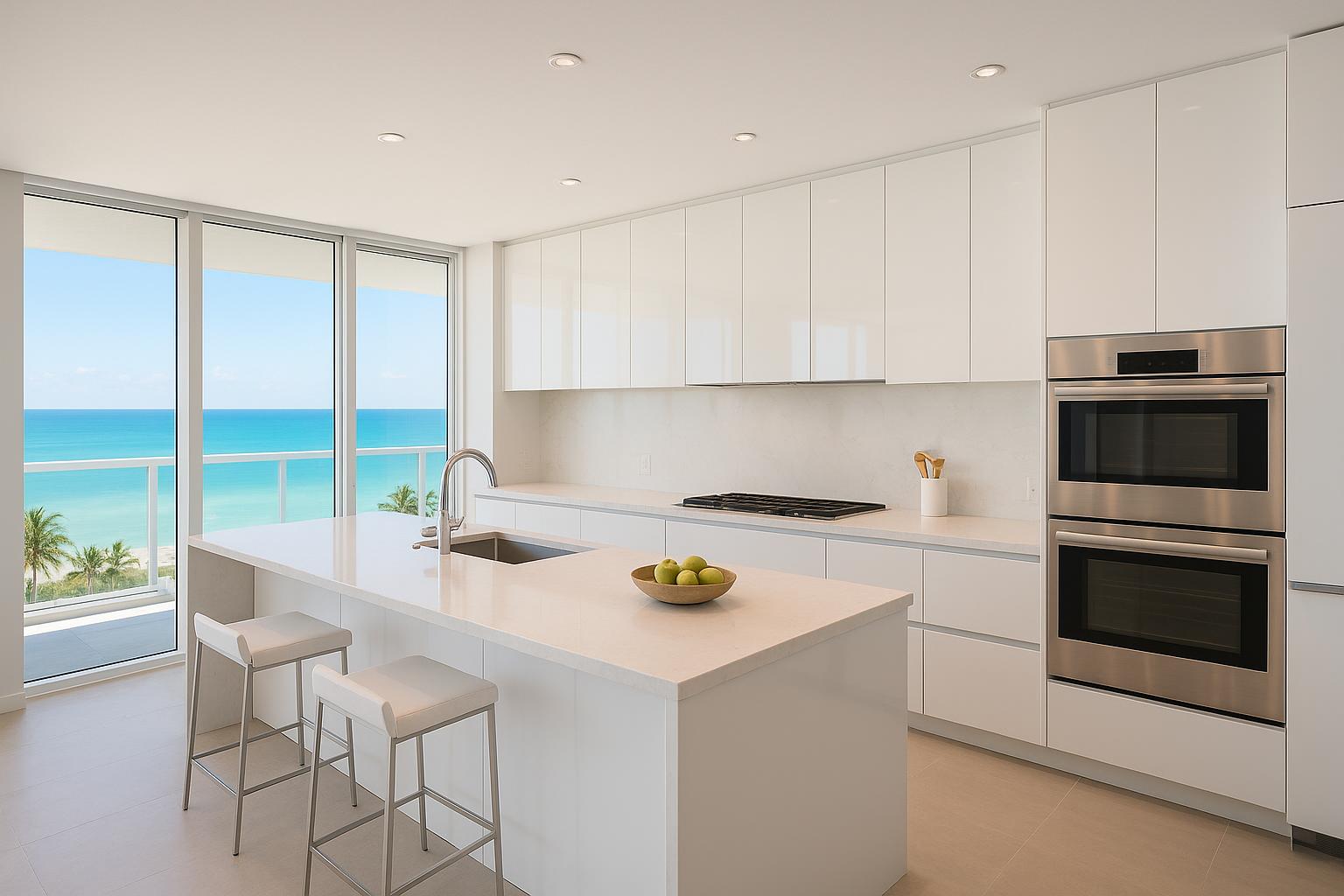
In kitchens, quartz countertops are a popular choice among our Miami Beach clients because they resist staining and don't require the regular sealing that natural stone demands. For flooring, luxury vinyl plank has become a go-to option in condos — it's durable, water-resistant, and many buildings accept it because of its sound-dampening properties.
A Quick Note on Scope
Condo remodels often have a tighter scope than whole-house renovations, but that doesn't mean they're simpler. A well-planned bathroom or kitchen remodel in a 900-square-foot unit can be just as complex as a larger project when you factor in plumbing constraints, ventilation requirements, and the coordination needed with your building. Don't underestimate the value of working with a contractor who understands these nuances.
Set a Realistic Timeline
Between HOA approvals, permit processing, material lead times, and building logistics, condo remodels in Miami Beach often take longer to get started than homeowners expect. A typical kitchen remodel might take four to six weeks of active construction, but the pre-construction phase — from initial planning to the first day of demolition — can add another four to eight weeks.
The best way to avoid frustration is to set realistic expectations from the start. Work with your contractor to build a timeline that accounts for every phase, including the administrative steps that happen before any physical work begins.
Work With a Contractor Who Knows Condo Buildings
Not every remodeling contractor is comfortable working in condo environments. The permitting process, HOA coordination, and logistical challenges require a specific kind of experience. When interviewing contractors, ask about their history with condo projects in your area. Do they know how to submit HOA applications? Are they familiar with the building departments in Miami-Dade County? Can they provide the insurance documentation your association requires?
At Miami General Contractors, we've completed kitchen and bathroom remodels in condos across Miami Beach, North Bay Village, and the surrounding barrier island communities. We handle the coordination with your building management so you can focus on the exciting part — choosing the finishes and design details that will transform your space.
Ready to Start Planning?
If you're a condo owner thinking about a kitchen or bathroom remodel, the best time to start planning is now. Reach out to us for a consultation, and we'll walk you through every step — from understanding your building's requirements to selecting materials that will look beautiful and last in your Miami Beach home.